
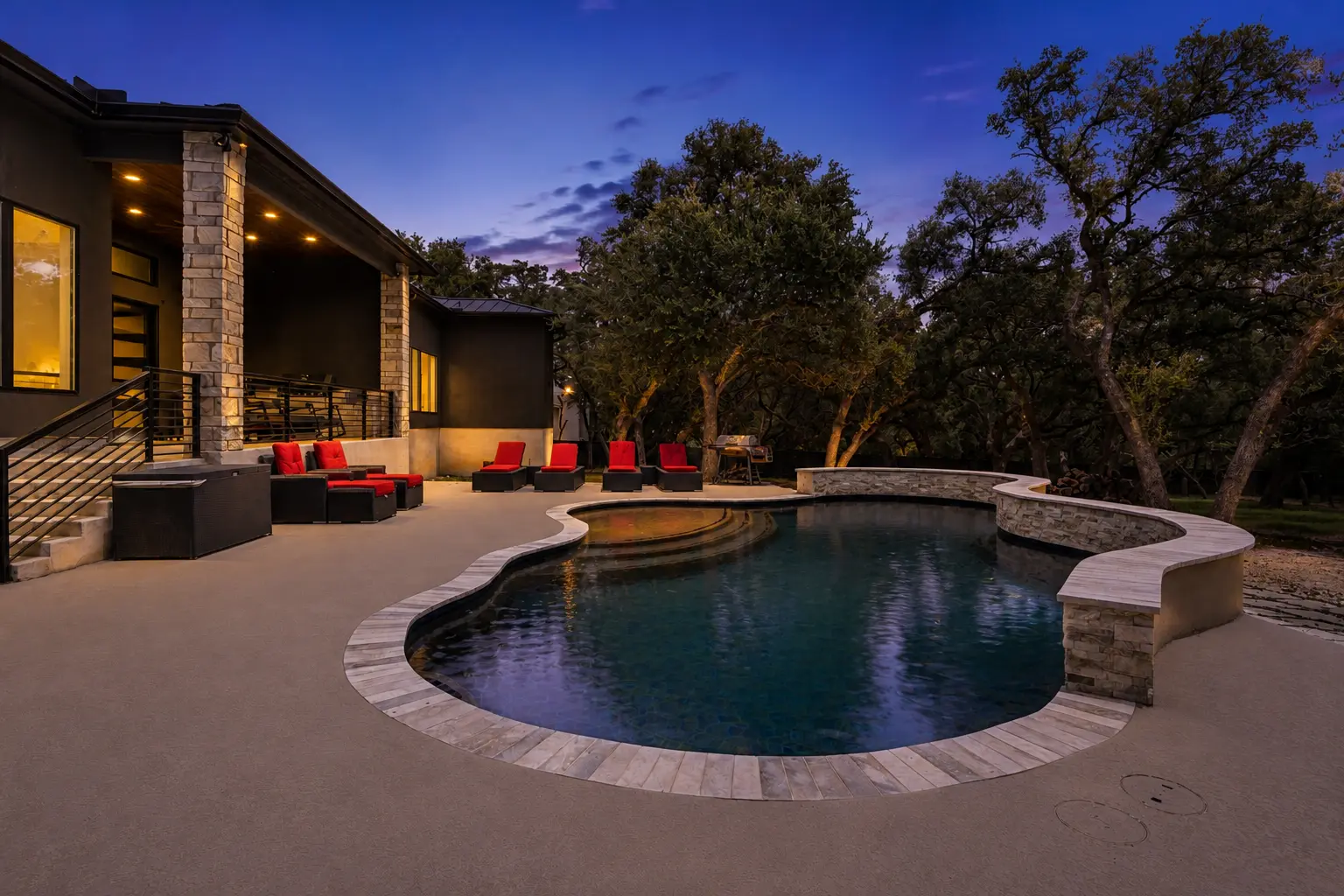
What separates the listings that create early momentum from the ones buyers watch, question, and pass over.
Luxury homes sell quickly when the price is supported by the market, the property is properly prepared, and the marketing makes its value easy to understand. They tend to sit when the asking price, condition, presentation, or buyer expectations fall out of alignment.
That’s the clean answer.
The longer answer is that luxury real estate has very little room for confusion. A buyer considering a significant purchase should not have to work through bad photography, vague marketing, an awkward showing process, and an unrealistic price before figuring out why the home deserves attention.
Some will. Most won’t.
Across San Antonio, Boerne, New Braunfels, and the Texas Hill Country, the homes that sell well aren’t always the newest or most elaborate. They’re usually the ones that make sense from the beginning.
The Market Doesn’t Care What the Seller Needs
This is where many luxury listings begin to drift.
A seller may arrive at a price based on what was paid for the property, how much was spent on improvements, what a neighbor’s home sold for, or how much the seller wants to net.
Those numbers may matter personally. They do not establish market value.
Buyers compare.
They study recent sales, active competition, days on market, listing history, condition, location, architecture, acreage, privacy, and construction quality. In the upper-tier market, many buyers have completed several real estate transactions. They know how to read the history of a listing, and they notice when a home has been following the market down through a series of small reductions.
Pricing a luxury home is more like calibrating a precision instrument than placing a sticker on a product. A small error may be manageable. Several small errors begin to distort the entire reading.
An ambitious price, dated interiors, limited photography, and difficult showing restrictions may each seem survivable on their own. Put them together and the property begins to lose momentum.
Sellers sometimes say, “We can always reduce the price later.”
They can. But later has a cost.
A new listing receives concentrated attention from buyers, agents, relocation clients, and people who have been waiting for the right property. When the price cannot be defended, that audience usually doesn’t disappear. It steps back and watches.
By the time the price changes, the listing is no longer new. Now buyers want to know why it hasn’t sold.
A sound luxury home selling strategy doesn’t require the lowest price. It requires a credible one.
Buyers Notice How a Home Feels
Presentation begins before anyone reaches the front door.
The condition of the landscaping matters. So do the driveway, exterior paint, windows, lighting, temperature, smell, and the way the entry feels when someone first walks inside.
None of those details carries the sale by itself. Together, they shape the buyer’s opinion of how the property has been maintained.
Luxury buyers can afford to make repairs. That doesn’t mean they want their first year of ownership consumed by contractors, estimates, and deferred projects.
Visible neglect also creates doubt. A loose handle is minor. A stained ceiling may have an innocent explanation. But once buyers see several unresolved issues, they begin wondering what else has been postponed.
Preparing a luxury home for sale does not always require a dramatic renovation. More often, it requires discipline:
- Repair what is visibly broken.
- Remove furnishings and objects that crowd the architecture.
- Improve weak or inconsistent lighting.
- Address worn surfaces and distracting finishes.
- Clean the areas the owner no longer notices.
- Bring the exterior up to the standard of the interior.
The objective isn’t to make the home appear untouched. It is to make it feel cared for.
Staging Is About Comprehension
Large homes can be surprisingly difficult to understand.
An empty room may photograph smaller than it is. An oversized bedroom can feel cold. A formal room, gallery, loft, or secondary living area may leave buyers unsure how the space fits into daily life.
Luxury home staging gives those rooms a working vocabulary.
The right furniture establishes scale. It shows how people move through the space, where conversations happen, and whether the room can accommodate the way a buyer already lives.
There is evidence behind this. In the National Association of Realtors’ 2025 Profile of Home Staging, 49% of sellers’ agents reported that staging reduced time on the market to some degree. Twenty-nine percent said staging resulted in an offer increase between 1% and 10%.
That does not mean every room should be filled.
Over-staging creates another problem. When a property is crowded with accessories, oversized furniture, decorative objects, and artificial lifestyle scenes, buyers stop seeing the house.
The furniture should explain the room, not become the listing.
Bad Photography Can Cheapen an Expensive Home
Professional luxury real estate photography is not an optional finishing touch. For most buyers, it is the first showing.
A property may offer exceptional architecture, custom materials, natural light, mature landscaping, and a strong indoor-outdoor connection. None of that matters online if the rooms are poorly composed, the windows are blown out, or the images are stretched beyond recognition.
Buyers may not know why an image feels wrong, but they recognize distortion. Once they stop trusting the photographs, they begin questioning the rest of the presentation.
Good photography should answer practical questions:
- How does the kitchen relate to the main living area?
- What can be seen from the primary suite?
- How do the interior spaces connect to the terrace or pool?
- Are the views prominent or visible only from one part of the property?
- Does the home receive consistent natural light?
- How private is the outdoor space?
Video, aerial imagery, floor plans, and virtual walkthroughs can add context, particularly for relocation buyers evaluating San Antonio or Texas Hill Country luxury homes from another city.
They should help buyers understand the property. They do not need to bury it under dramatic music, slow-motion faucet shots, and editing tricks.
The purpose is to earn a qualified showing, not win an award for cinematography.
“Luxury Lifestyle” Often Means Nothing
The phrase appears in listing descriptions constantly.
“An unparalleled luxury lifestyle.”
What does that actually tell the buyer?
Does the home offer meaningful privacy? Can the owner walk or drive a golf cart to the club? Is there room for extended family, horses, staff, a car collection, or a private office? Does the outdoor living area remain comfortable in the afternoon, or does the western exposure make it difficult to use for half the year?
Specific details create value.
A covered terrace is common. A covered terrace positioned for sunset views, protected from prevailing winds, and connected directly to the kitchen and pool is something buyers can understand.
Five acres may sound impressive. But are they level, wooded, usable, restricted, private, or suitable for a guest house? The acreage matters only after the buyer understands what it allows.
Effective luxury real estate marketing explains how the property functions and what would be difficult to replicate elsewhere.
That distinction is especially important in markets such as Boerne, Kendall County, New Braunfels, Comal County, and the broader Texas Hill Country, where two homes with similar acreage can offer completely different experiences.
The best properties usually have one or two qualities that cannot be reproduced easily. Find them. Then build the marketing around them.
[Read our latest neighborhood spotlights throughout San Antonio and the Texas Hill Country.]
The Agent Sets the Tone
A luxury agent’s job is not simply to enter the property into the MLS, schedule photography, and wait for inquiries.
Good representation sometimes requires challenging the seller before the market does.
That may mean recommending a different price. It may mean asking the owner to remove furniture they genuinely love. It may mean delaying the launch until repairs are complete. It may also mean explaining that an expensive improvement will not necessarily return dollar for dollar.
These are rarely comfortable conversations. They are still necessary.
The agent also controls the way the property enters the market: the launch date, written copy, photography, showing procedures, broker outreach, online distribution, buyer follow-up, and communication surrounding the listing.
Properties develop reputations.
Agents talk. Buyers compare notes. A difficult showing process, unanswered questions, inconsistent property information, or poor follow-up can quietly work against a home.
The marketing should also fit the property. A contemporary San Antonio residence should not be positioned like a Hill Country estate. A ranch property should not be marketed like a lock-and-leave home in a private golf community.
Different homes solve different problems.
The agent’s responsibility is to understand which problem the property solves, identify the buyers who care about that solution, and make the connection clearly.
The luxury homes that sell quickly are not always perfect. They are usually clear.
The price holds up. The property feels maintained. The rooms make sense. The photography can be trusted. The marketing explains what is rare. The agent manages the details before they become objections.
When several of those pieces are missing, even a remarkable home can sit.